About
Learn NV centers through real experiments.
This site is an end-to-end learning path for NV/ODMR—built from an active lab. Explore how the instruments connect, see how to collect data, and apply to your own setup using the knowledge base!
Hands-on modules
Learn by doing: each module pairs intuition with procedures, live plots, and analysis code you can reuse.
Foundations: NV physics & ODMR
Energy levels, Zeeman splitting, optical pumping, and why ODMR works.
Optics
Confocal, mirrors, AOTF, focus, and everything optical.
Spectroscopy
ZPL, Phonon sideband, excitiation, and how to interpret the NV fluorescence spectrum.
Spin control: Rabi / T1 / T2
Pulse sequences, timing, microwave power, power broadening.
Imaging: confocal & widefield
Scan controllers, stage control, PSF, and acquisition to visualization.
Applications & projects
Magnetometry sketches, stress mapping, thermometry, and radiation dosimetry.
The lab stack
What we teach with: real hardware, safe defaults, and control UIs that reflect production setups.
Tip: Click any card to view the full list of equipment for that area.
Laser (532 nm)
DPSS w/ AOTF control
- Thorlabs CPS532 DPSS (532 nm)
- AA Opto-Electronics AOTFnc-VIS-TN
- MPDSnc Multi-Purpose Direct Digital Synthesizer
- Optotune EL‑16‑40‑TC + Lens Driver 4 (focus)
- Dichroic + cleanup filters paths)
- Mirrors + beam-shaping
Microwave chain
MW Generator + amp + antenna
- Siglent SSG3032X signal generator (9 kHz–3.2 GHz)
- Mini‑Circuits ZRL‑3500+ power amplifier
- Custom ODMR 2.87GHz Antenna
- Controlled via Pulse Streamer 8/2
- Low‑loss SMA coax (LMR‑400 / KMR‑400)
- (Optional) Directional coupler + power meter
Photon detection
SPAD + TCSPC / Time‑Tagger, EM‑CCD
- Excelitas SPCM‑AQRH‑14‑FC APD (fiber coupled)
- Swabian Time Tagger 20
- Hamamatsu C9100‑13 EM‑CCD + HCImage Live
- Fiber couplers (FC/PC, FC/APC) + SM fiber
- Dark box / baffles + pinhole
Optics & motion
WI objectives, filters, PI E‑710 stage
- Nikon TE2000‑U inverted microscope
- Plan Apo VC 60× 1.2 NA water‑immersion objective
- 50 µm pinhole confocal assembly
- PI E‑710 piezo stage
- Kinematic mounts, cage system, posts
Control software
MATLAB/Python + custom UIs
- MATLAB R2015a (32‑bit) for legacy control
- MATLAB R2024b for analysis/plots
- Python (TimeTagger API, ZMQ stream server)
- Swabian Pulse Streamer 8/2 timing
- AutoHotkey automation (HCImage Live)
Data
Live viz, storage, interpretation
- Live images + line traces during scans
- Time‑tag capture via FileWriter (.ttbin)
- Sequence Generation and timing files
- Piezo actual readback data
Luke Shoen
Ph.D. Graduate Student
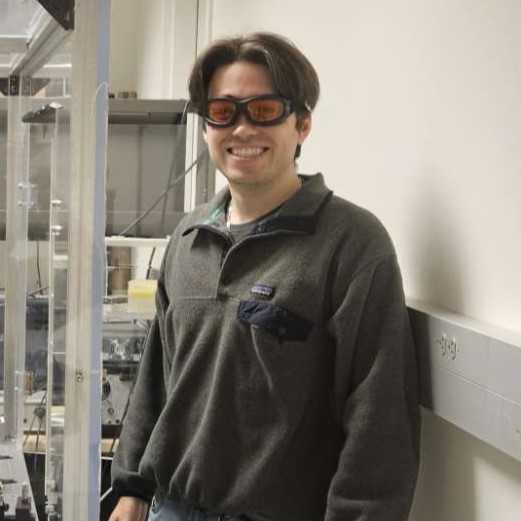
I am a third year Ph.D. student at The Ohio State University with research focus on quantum sensing using NV centers in diamond. I have done research on pervoskites, rad-hard FPGA single event upsets and gamma effects. I have a background in mechanical engineering from Mount Vernon Nazarene University. I love to do astrophotography, play rocket league, golf, and skiing :)
Strengths
How I work
Timeline
- 2026 Q1Project started. Building the entire system from scratch from inherited parts. Working to find uses for all components.
- 2026 Q1–Q2Direction Acquired
Beging by characterizing NV centers in diamond, a perfect starting place. The first steps are to build a confocal fluorescence scanning microscopy system.
- 2026 Q3–Q4Software creation
Work on creating an all-in-one MATLAB program to host all equipment for the system. Some equipment is 15+ years old, some are brand new. A challenge is presented of integrating components decades apart. Began building this website. I was disappointed how there wasn't a single source for someone wanted to build a system like this with no experience. I wanted to fill that gap.
- 2027 Q1First Soft Launch of Website
Launch of website!
- 2027 Q2+Expand
Widen scope of website, add more chapter, more demos, etc.
Can I follow the modules without your exact hardware?
Yes. We note interfaces and provide abstraction layers so you can swap equivalent parts (laser, drivers, detectors, stages) while keeping procedures intact.
What’s the minimum setup for CW-ODMR?
532 nm source, objective, diamond sample, APD/SiPM, microwave source+amp+antenna, and basic filtering. Optional AOM/AOTF for power control improves stability.
How long does alignment typically take?
On a known rig: 10–30 minutes for confocal; on a fresh setup: plan 1–2 sessions to dial in pinhole, APD coupling, and microwave delivery.
Do you provide troubleshooting tips?
Yes, I will sometimes list the issues I faced at a note in the respective chapter/section of the learn page.
Are there alternatives for the Time-Tagger?
You can start with a counter or fast DAQ for CW-ODMR. For time-resolved work, TCSPC or FPGA taggers help. Time tagger is just an excellent plug-n-play option
Is the content open for classroom use?
Educational use is encouraged. Each module/repo includes licensing; please follow those terms and keep attribution.
Do you do virtual meetings for tailored assistance/advice?
It depends, but I am always available to chat at my email or via contact page!
Where should I start if I’m new?
Begin with the Learn page! This was built for beginners in mind! There will be videos, demos, and other resources if you have more questions.
Want a tour or virtual help?
We can tailor a live demo or walk through guided tour if you are in the area. I would need to get prior approval beforehand, so please reach out first!
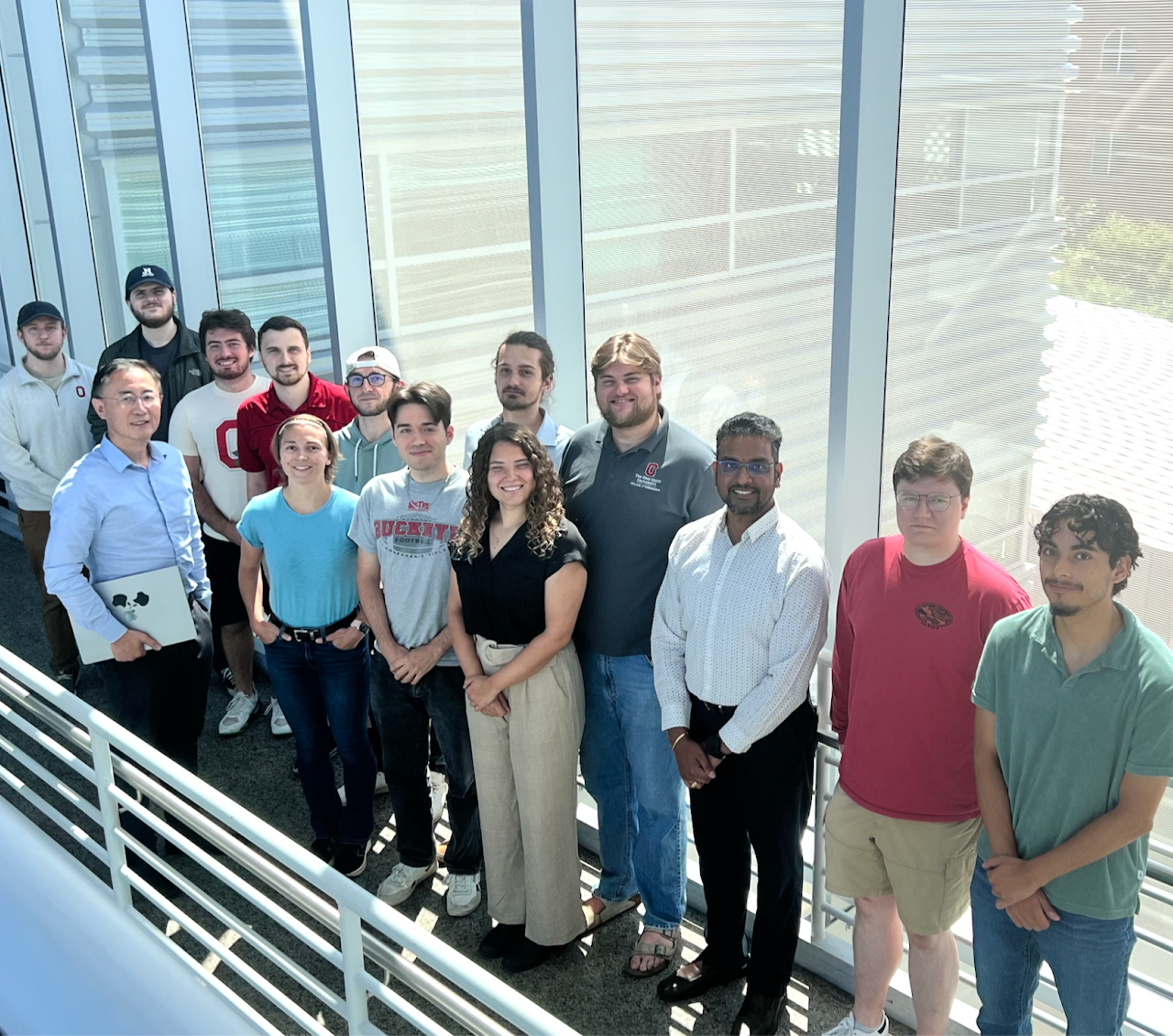
Groups and labs we collaborate with.



© 2026 Q-Diamond